
What is an integrated waste-management center and why does it matter?
An integrated waste-management center (CMID) should offer modern, sustainable answers to rubbish—sorting, composting, recycling and tightly controlled disposal. Its purpose is to divert trash from landfill, increase recycling rates and protect the environment. In Vâlcea County, the Roești CMID was meant to anchor a county-wide system financed with European environmental funds for Romania and to correct years of illegal dumping and improvisation. The reality tells another story.
Vâlcea’s waste system: an expensive pit instead of an eco-center
Nearly two decades after the idea first surfaced, Roești CMID exists on paper yet is a public embarrassment in practice. Costing more than €23.5 million (€18.5 million for Roești alone) and co-funded by the European Union, the Romanian government and the Vâlcea County Council, the project was promoted as the county’s salvation. In fact, it is overpriced, chronically delayed and mired in administrative and legal chaos.
A project stalled for years by institutional incompetence
Planned back in 2010, the county’s integrated waste-management system became a textbook case of failure: cancelled procurements, repeated re-phasing and empty political promises. Construction finished in 2023, and the center was inaugurated in January 2024, yet it remained idle for months because no operator had been appointed. By 2025 Vâlcea had built a European-funded treatment hub—only to keep it locked.
Operator appointed without tender: the Brantner–RO ECO deal
When the operating contract finally surfaced, county authorities bypassed an open tender. They chose a closed-door negotiation that awarded the job to Environment Care Waste Management SRL—effectively Brantner. The partnership signed on 6 March 2025, even though a court had already cancelled the procedure. Despite that ruling, the contract took effect in April, and the company started work without full permits, proper equipment or respect for contractual terms.
A shell company and a foreign giant: recipe for failure
Environment Care Waste Management SRL (also called RO ECO) is a near-dormant firm with ten employees and 2024 revenue of about €200,000, linked to controversial figures in the Romanian waste sector. Brantner joined this influence vehicle to slip into the market through the back door.
Brantner — a history of scandals
Brantner’s record is troubling. In Cluj one administrator faced a corruption case with the mayor; the court eventually acquitted, but the brand’s image suffered. In Sălaj the firm was fined for operating without a permit. In Târgu Mureș it partnered with controversial companies, causing chaos in waste collection. The pattern repeats: questionable entries, disdain for rules, sub-standard service.
Mixed waste, idle facilities, European money at risk
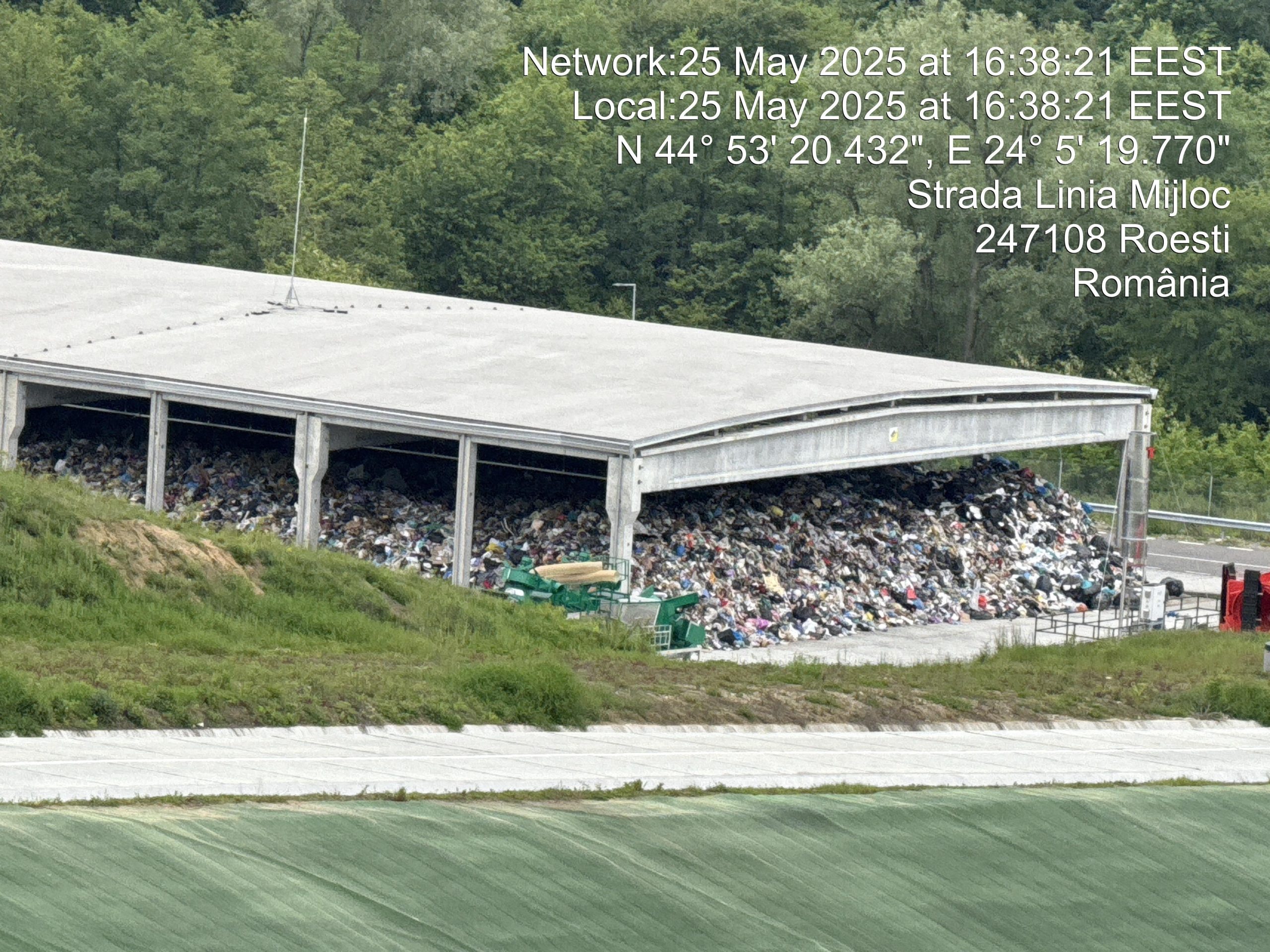
Although Roești has state-of-the-art sorting and treatment lines, Brantner has reduced the site to a dump. Trucks arrive with mixed waste—no separate collection, no sorting, no composting—defying the project’s purpose and breaching both contract and funding rules. Witnesses even report smoke rising from the mixed pile, raising fire fears in a site with dubious safety measures.
Operating without authorization: regulators tolerate illegality
In April 2025 Brantner began work before the integrated environmental permit had been transferred. Regulators stayed silent. Worse, the expired permit—issued to a municipality seven years earlier—was “reactivated” in just three days, although such a process normally takes months. Only prosecutors can clear up this mystery, yet the passivity of the Environmental Protection Agency and the Environmental Guard suggests complicity by inertia.
An “integrated” system only on paper
The county plan expected Roești to treat part of the waste while the rest went to Râmnicu Vâlcea, but the second facility was never built. Roești must now take everything, leading to overload and gridlock. Without sorting or treatment, recycling targets cannot be met and Vâlcea risks EU penalties that residents will ultimately pay.
Roești CMID — a non-functional center and a growing problem
By mid-2025 Roești still works far below design capacity. Equipment—sorting line, mechanical-biological treatment, leachate plant—exists but is bypassed or underused. The site functions as a temporary dump for continuous mixed waste. Main failings:
- Lack of effective separate collection; mixed waste arrives.
- Operations began before full permits were in place.
- Other system infrastructure is unfinished, overloading Roești.
- Legal disputes persist between the county association and operators.
- Performance indicators are at risk; €30 million in European funds could be clawed back.
Officials say the system will be normalised in late 2025, but success depends on court rulings, municipal cooperation and Brantner actually using the treatment lines.
Major risks: loss of European funds and system bankruptcy
Unless faults are fixed quickly, Roești could become a national fiasco. Failure to meet EU targets may trigger repayment of funds and leave the county facing both financial and environmental collapse.
Who is Environment Care Waste Management SRL?
A detailed corporate profile remains under investigation; section to be expanded when verified data are available.
Brantner in Romania — big numbers, systemic problems
Founded in 1936 in Krems, Austria, Brantner expanded eastward in the 2000s. Its Romanian holding, created in 2004, runs contracts in Cluj-Napoca, Oradea, Reșița, Zalău, Satu Mare, Târgu Mureș and other cities. In 2020 the Cluj subsidiary reported revenue of roughly €15.5 million and more than 500 staff. Behind those figures hide quality complaints, dubious tenders and opaque alliances.
Brantner in Vâlcea — troubled entry, opaque partnerships
Brantner entered Vâlcea only recently by partnering with RO ECO, a firm with no operational record. Critics label RO ECO a political influence vehicle. The county association accepted the pair without real competition, fuelling public suspicion in light of both companies’ controversial histories.
Târgu Mureș — the ignored lesson of toxic partnerships
Between 2021 and 2022 Brantner partnered with Sylevy Cleaning after the city’s main contract expired. Streets quickly filled with uncollected trash. Litigation dragged on, and by 2023 another consortium took over. The episode showed how local quick fixes can backfire—yet Brantner appears to repeat the pattern in Vâlcea.
A European project sacrificed on the altar of local deals
Roești CMID shows how a system can mimic progress yet deliver costly failure. The Vâlcea County Council and the county association bear direct responsibility: they tolerated an unlicensed operator, accepted obscure partners and excluded the public from decisions. Unless they take drastic action, Roești will be remembered not as a European model but as a monument to administrative hypocrisy—and as a warning that European environmental funds for Romania are only as secure as the institutions that manage them.